Is the tracker music scene dying?
category: general [glöplog]
I'm 22 I feel like I've been hyperfixated on OpenMPT due to listening to .mod, .xm, .it, and .s3m, but how am I even supposed to tell if the scene is shrinking or if I’ve just fallen into some niche rabbit hole all by myself? It’s like everyone else moved on to fancy DAWs and I’m still here obsessing over hex values and pattern effects like it’s the 90s.
Speaking of the 90s, back in that period, people my age group that are tracking while they are in college (I assume) or working or unemployed
They don't know how good they got back then
Speaking of the 90s, back in that period, people my age group that are tracking while they are in college (I assume) or working or unemployed
They don't know how good they got back then

Quote:
some niche rabbit hole

More seriously, nah mate. There's a lot of kiddos using renoise and/or the m8 tracker, and/or weirder stuff, it's not "the tracking scene" yeah, indeed. It's some folks doing chiptunes for games, it's some other folk using m8 tracker for making cool electronic beats, it's just a tool.
Yeah sure, there's a bit of "missing the right moment" here but to be fair, it's not like the people of Tokyo Dawn Rec. hung with the tracne people. People were not all lovey dovey just because they used trackers.
Also, I'm fairly – super pretty – sure people used trackers because they wanted to make music, not because they wanted to be "in the tracking scene" so in a sense, if they find better tools to keep making music, they will use these.
Yeah sure, there's a bit of "missing the right moment" here but to be fair, it's not like the people of Tokyo Dawn Rec. hung with the tracne people. People were not all lovey dovey just because they used trackers.
Also, I'm fairly – super pretty – sure people used trackers because they wanted to make music, not because they wanted to be "in the tracking scene" so in a sense, if they find better tools to keep making music, they will use these.
It's a niche these days but what's wrong with being in a niche? And it's a niche which seems to be well alive nevertheless. Moog synthesizers and pipe organs are cool so why not tracker programs... Isn't the knowledge about the older technology something with an intrinsic (and possibly also practical) value?
Naturally, you can use both modern music programs and trackers (OpenMPT's native format has many modern features, so that's one place to reach for modernity), to get best out of them both. Though your fondness of hex numbers may lead you also further into the past.
Naturally, you can use both modern music programs and trackers (OpenMPT's native format has many modern features, so that's one place to reach for modernity), to get best out of them both. Though your fondness of hex numbers may lead you also further into the past.

Trackers ain't just about "the oldschool format".
When you've got talented newcomers like Djego Flochs coming up with interesting experimental works, I'd say the tracker scene is far from dying.

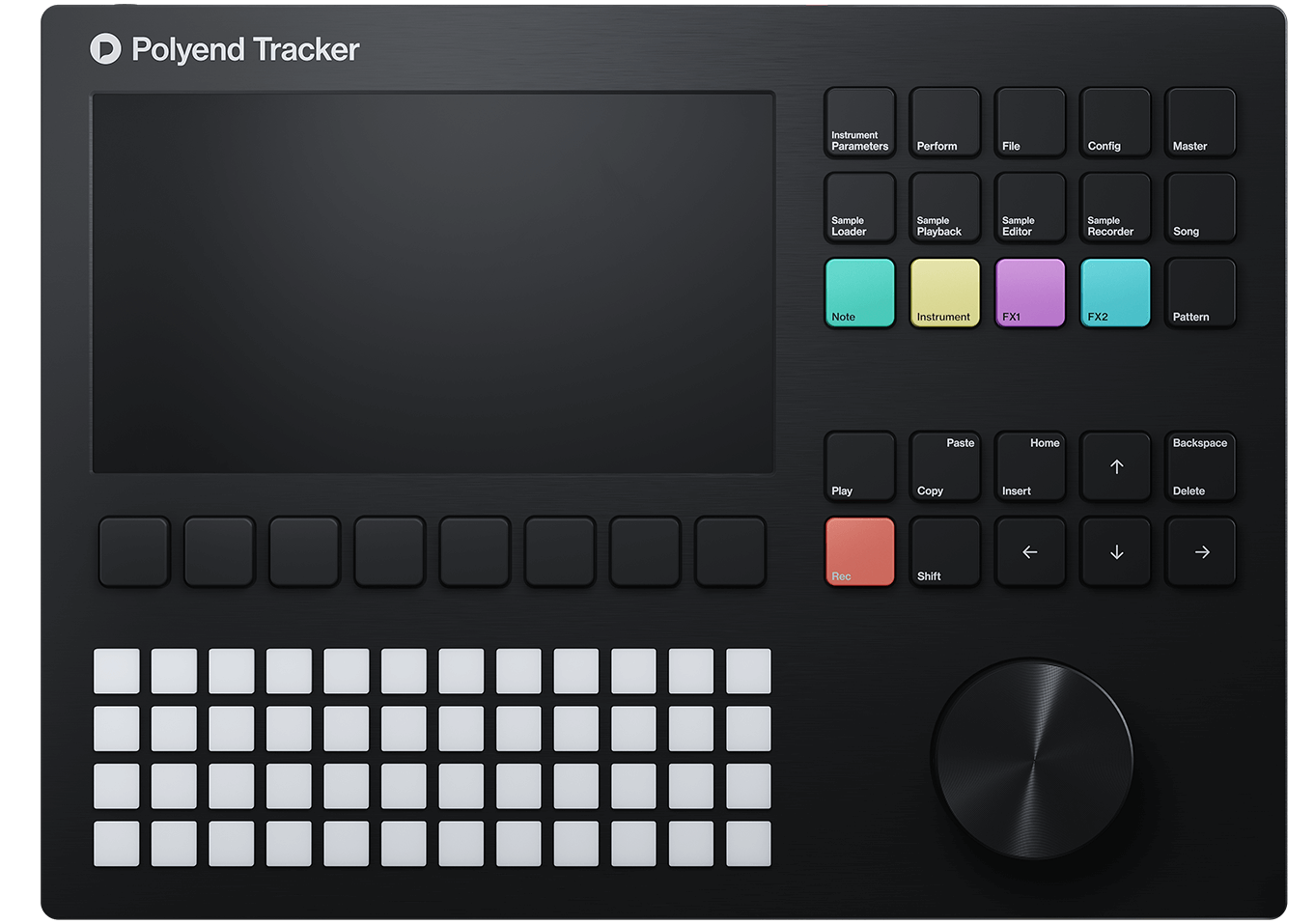

Somehow that got me back into ProTracker (and has itself been collecting dust on the shelf for a couple of years).

I also loaded up PT2.3d after a 25 year break. Still a lovely tool and it's hard to forget how to track on it - like riding a bike. I have different vision and goals now using it compared to when I was younger tho. Makes me also more relaxed using it.
In regards of professional music I simply would say the sound quality is one of the reason why people just use DAWs nowadays. You have so much more headroom and nice VSTs or even new hardware to explore.
In regards of professional music I simply would say the sound quality is one of the reason why people just use DAWs nowadays. You have so much more headroom and nice VSTs or even new hardware to explore.

Of course, tracker music has become more underground now than it was in the ’90s (back when it was listened to by regular PC users who knew nothing about the demoscene).
On the other hand, many subcultures have appeared around trackers today, and they don’t overlap much:
There’s the demoscene, where tracker music is composed for old-school demos as well as for compos at demoparties.
There are various chiptune/8-bit communities that don’t really know much about the demoscene; they just like the “chiptune sound,” the sound of old game consoles, and so on. They have their own parties and their own circles.
There are people not really connected to the demoscene who compose music in trackers, exploiting the aesthetics of 8/16-bit sound chips, and release full albums of it in mp3/flac.
There’s the Furnace tracker with its own community.
And yes, I know people who still earn money by composing tracker music for indie games.
So actually, you have plenty of room to maneuver :)
On the other hand, many subcultures have appeared around trackers today, and they don’t overlap much:
There’s the demoscene, where tracker music is composed for old-school demos as well as for compos at demoparties.
There are various chiptune/8-bit communities that don’t really know much about the demoscene; they just like the “chiptune sound,” the sound of old game consoles, and so on. They have their own parties and their own circles.
There are people not really connected to the demoscene who compose music in trackers, exploiting the aesthetics of 8/16-bit sound chips, and release full albums of it in mp3/flac.
There’s the Furnace tracker with its own community.
And yes, I know people who still earn money by composing tracker music for indie games.
So actually, you have plenty of room to maneuver :)

using trackers: not niche
tracker scene of the 90s: niche
tracker scene of the 90s: niche
I had to scroll up to see if this thread was started in 2001. It was "dying" then (thanks in part to the DOS+soundcard to Windows+soundchip transition), but really hasn't changed since; if anything there are more tracker compos today than there were 10-20 years ago, along with a steadily growing supply of clones and ports.

Quote:
(thanks in part to the DOS+soundcard to Windows+soundchip transition)
So we went from cardtunes back to chiptunes?

I have left the demoscene long time ago, and after that I thougt that I should use Cubase like all 'real' musicians do... it didn't help me...
I then got Renoise and it didn't help much either... atleast for some years...
In 2022 I got the Korg M1 Vst, and that suddenly kickstarted my Renoise activity again, and I have never created so much music before, as now.
My Soundcloud profile has passed the 3 hours limit.
Tracker scene dead, or not? I don't know. I haven't followed it..
But I can say that my tracking is very active these days in Renoise.
Creating 'Berlin-school' in Renoise is a kind of therapy for me. It reduces my stress.
I then got Renoise and it didn't help much either... atleast for some years...
In 2022 I got the Korg M1 Vst, and that suddenly kickstarted my Renoise activity again, and I have never created so much music before, as now.
My Soundcloud profile has passed the 3 hours limit.
Tracker scene dead, or not? I don't know. I haven't followed it..
But I can say that my tracking is very active these days in Renoise.
Creating 'Berlin-school' in Renoise is a kind of therapy for me. It reduces my stress.

Quote:
They don't know how good they got back then
Oh we do, trust me.

TraxInSpace had it's own circle/community too. i remember having several high school mates who used FT2 to make music and they were relatively active on TraxInSpace. and also at school they talked about it (that's how I knew about their .xm endeavours), shared modules, hung around to make music together, etc. they used 'scene' as reference to the tracker scene (mostly meaning the corpus of people who track music and concretely the TraxInSpace repository and its web1.5 "social features" I guess) and they didn't knew _anything_ about the demoscene, not even that it existed. also, for them it was just the fun of making music, not the 'scene' aspect of it :)

Quite shocked I'm agreeing with maali here…
I remember TraxInSpace. Still have the Intersellar Harmony CDs somewhere. On TraxInSpace they had a system where you had to rate 10 tracks or so in order to get your track rated. And there were also compos iirc. United Trackers was also a big club and a website (well a simple landing page with links most of the time, similar to scene.org). I supported them by sporting the official United Trackers tshirt. Worn out to disintegration unfortunately.

there was also "tracker of the month", I remember getting in touch with Willbe and Melvyl because of that; Xerxes had been one too. Oh and Pedro I think, I still have that TiS Pedro CDR somewhere…
But again, for many people it was just a place to upload your tracks and try and meet likeminded people, like a network, and build something else with them… such as a crew, or what actually are the premices of netlabels (arguably, NOiSE was before TiS). Musicians will music, be it on trackers, daw or in real bands. It's fine getting into the nostalgia of it but don't think that people had a hard-on just because they were editing the shit out of their patterns.
But again, for many people it was just a place to upload your tracks and try and meet likeminded people, like a network, and build something else with them… such as a crew, or what actually are the premices of netlabels (arguably, NOiSE was before TiS). Musicians will music, be it on trackers, daw or in real bands. It's fine getting into the nostalgia of it but don't think that people had a hard-on just because they were editing the shit out of their patterns.
Quote:
It's fine getting into the nostalgia of it but don't think that people had a hard-on just because they were editing the shit out of their patterns.
If we talk about the ’90s, then yes. People chose trackers simply because they were the most accessible option (including for sharing files).
But in the late ’90s and early 2000s, many people started using trackers just for fun. Different artificial limits were created for competitions (let’s remember the Big Chiptune Compo), and everyone was flexing their tracker kung-fu :)
So for me, these are different periods. These days, the people who compose in trackers are mostly maniacs who really enjoy patterns, channels, hex numbers, and that whole thing :)
Or guys who got used to this form factor back in the ’90s and now run Renoise with VST plugins.
Quote:
You don't really have much of a choice on a wide range of platforms.the people who compose in trackers are mostly maniacs who really enjoy patterns, channels, hex numbers, and that whole thing :)

Quote:
but don't think that people had a hard-on just because they were editing the shit out of their patterns.
When we talk about Trax In Space, it’s also useful to remember that those were analog phone line / 56k modem days. Younger folks perhaps don’t fully grasp that you couldn’t stream mp3s back then. Stuff was usually downloaded either through ftp or peer2peer. If you wanted to check out an mp3 tune you had to wait and wait and wait. Modules were smaller and practically losless.
Quote:
If we talk about the ’90s, then yes. People chose trackers simply because they were the most accessible option (including for sharing files).
But in the late ’90s and early 2000s, many people started using trackers just for fun. Different artificial limits were created for competitions (let’s remember the Big Chiptune Compo), and everyone was flexing their tracker kung-fu :)
So for me, these are different periods. These days, the people who compose in trackers are mostly maniacs who really enjoy patterns, channels, hex numbers, and that whole thing :)
Or guys who got used to this form factor back in the ’90s and now run Renoise with VST plugins.
I can't even afford Renoise because I'm a BROKE
Though I still use Open Modplug Tracker to this day
Wonder if I could wish for an Amiga 1200...
Oh, and I forgot, I'm from the USA
Quote:
I can't even afford Renoise because I'm a BROKE
Well, your nick is “keygenism”. Take a hint? ;)
Quote:
Wonder if I could wish for an Amiga 1200...
For what? It's much less capable than Open MPT, and costs much more than Renoise.
